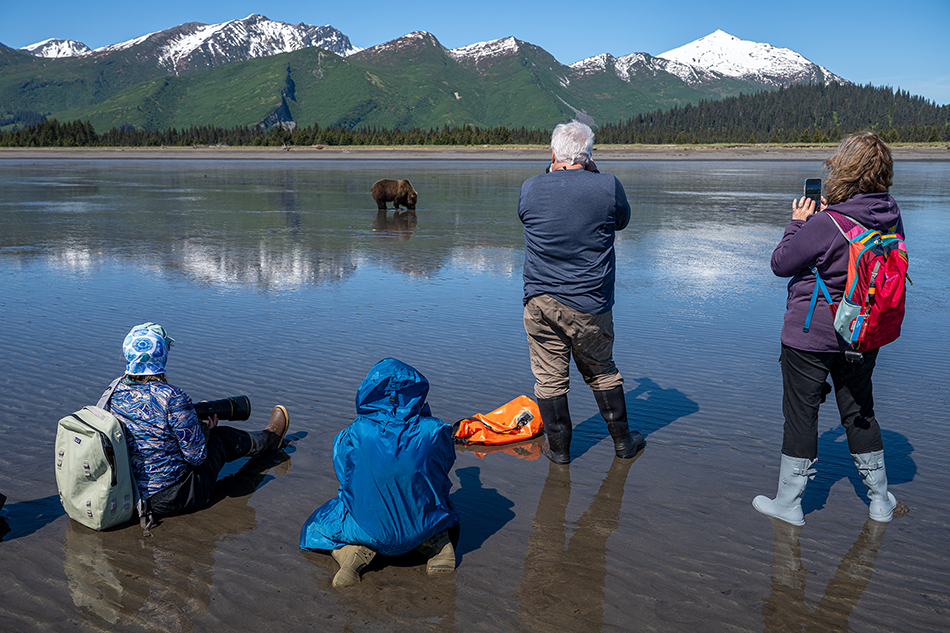
Simple question. Long answer! We just returned from our Lake Clark bear workshop, and as always had a fantastic time. Of course the big question was …what makes a good bear photo? While the answer can be subjective, there are some tried and true principles that produce those amazing images…we have had multiple participants win photo contests with images taken on our bear trips. First, I’d take a look at this article I wrote for Nikon called The Bear Essentials. This will get you started towards better bear images.
Let’s take a look at some tips and techniques that help create fantastic bear images. Here are some images from last week’s workshop.
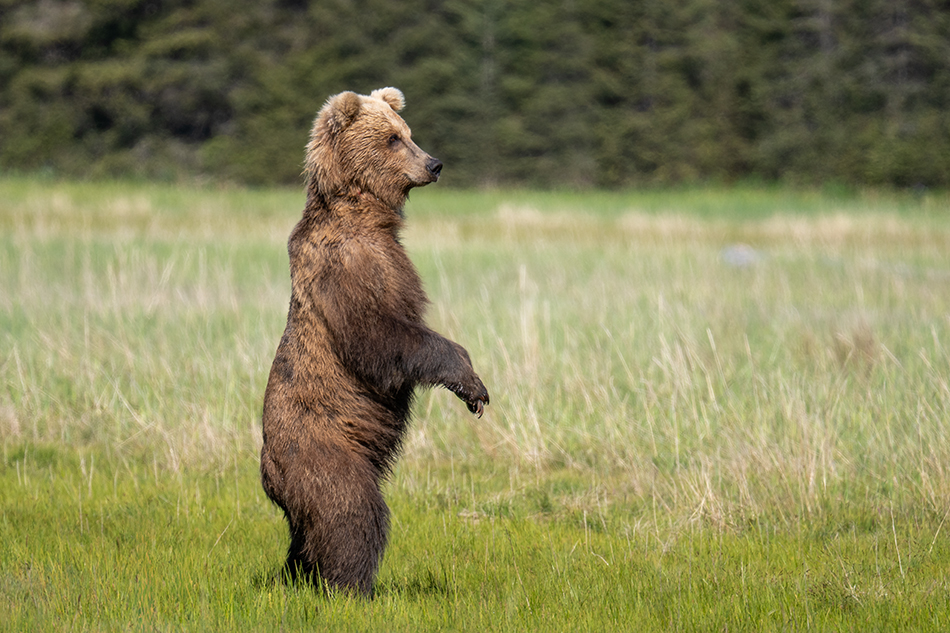
Behavior. Understanding/ anticipating bear behavior, and capturing interesting behavior is key to many great bear images. If you know when a bear is going to stand up, or when adults are going to fight, these will be unique moments and interesting to your viewers. If you don’t know bear behavior, go with a guide who can help predict those award winning moments. Be patient…and ready.
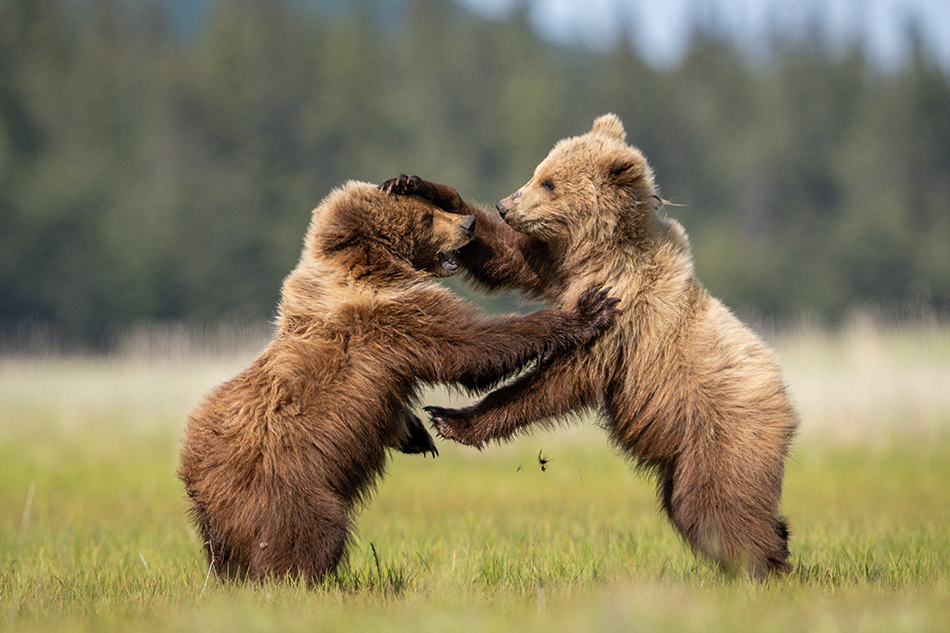
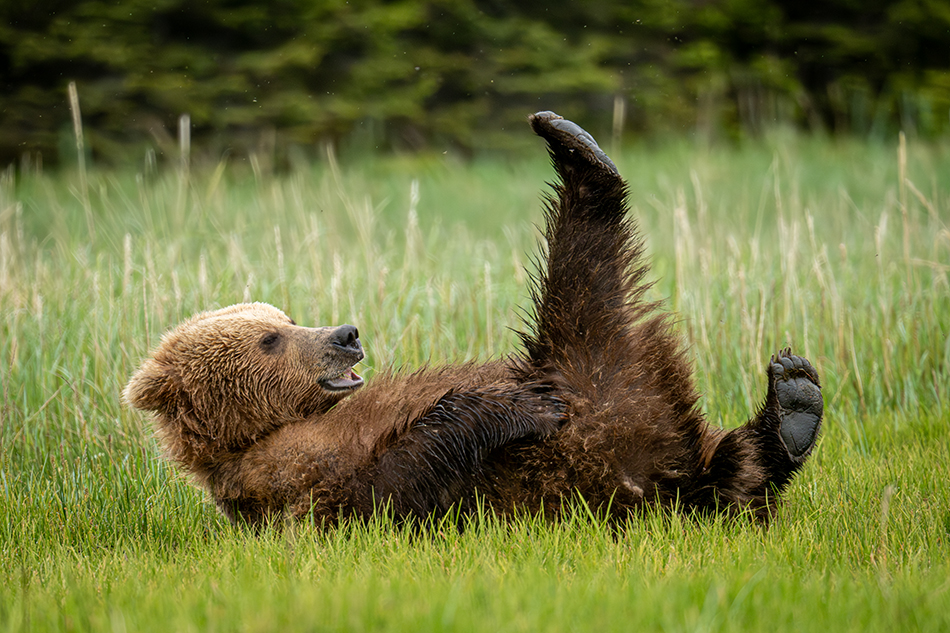
Emotion. Images that are emotive will resonate with your audience and draw them in. Who doesn’t like playful cubs or a bear stretching in the meadow? We had a number of bears mating last week which was also interesting and emotive. Cubs are always a favorite subject, and will get a strong reaction from your audience.
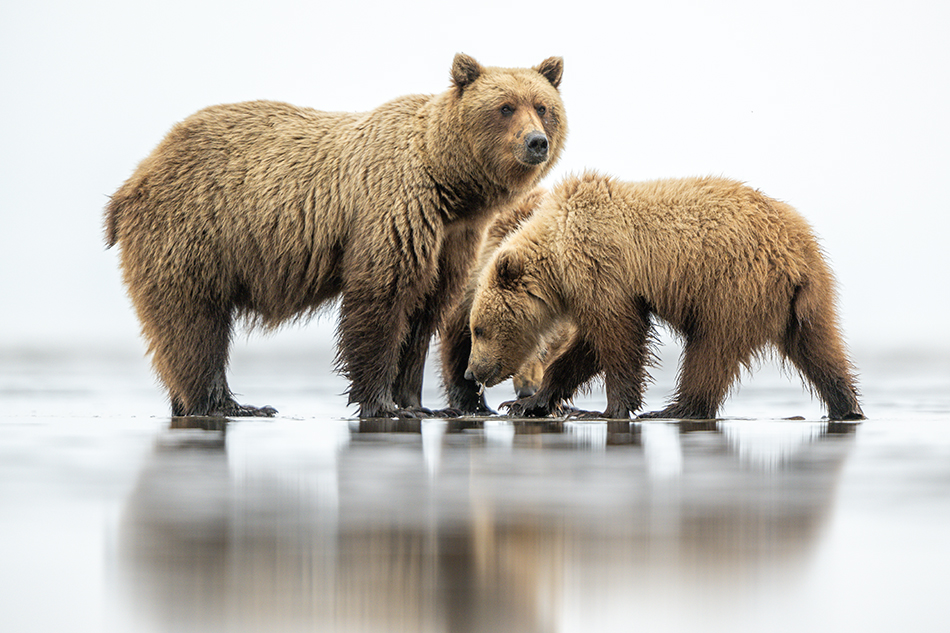
Perspective. This is a camera craft item. Many times getting low to the ground will give you dreamy foregrounds and intimate perspectives of the bear. Last week we were holding our cameras about one inch off the water using our LCD screens to focus on mudflats as the bears were clamming. The effect created terrific images and interesting reflections.
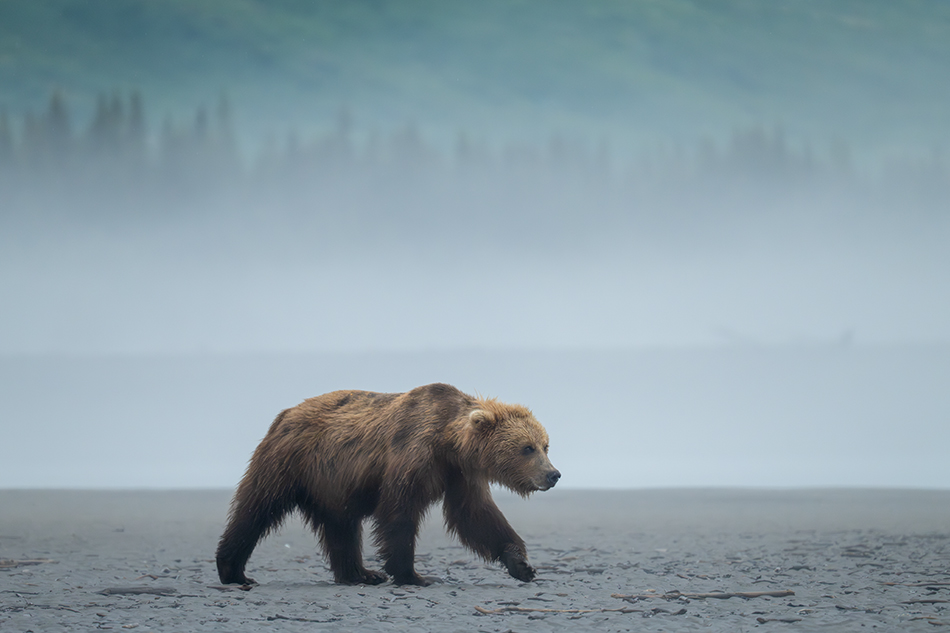
Atmospherics. Moody weather can be great for bear photography. We had a fog layer one morning which created mystical backgrounds for the bears. Other times with overcast skies we deliberately overexposed images for high key bears. Embrace bad weather, it might give you unique images. I once watched a bear catching raindrops on his tongue during a rainstorm.
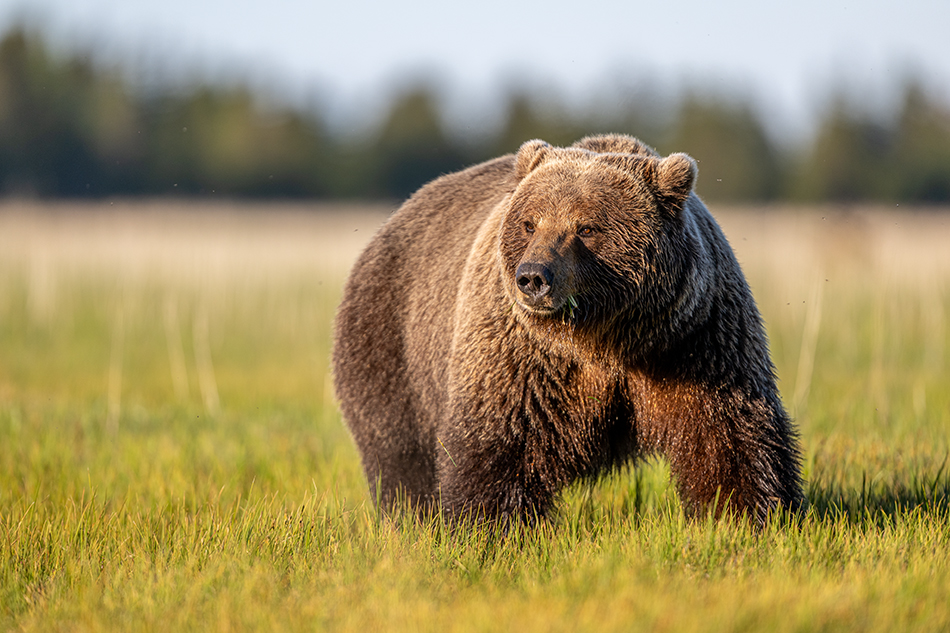
Separation. This is a little more subjective, but shooting at very shallow depth of field will make your bear pop of the background and foreground. It will depend on the shot…you might want to include the background for more information about your shot. But many times I like to create mood by shooting at shallow depth of field so the bear is almost floating off the page. Try apertures of F4 or wider with telephoto lenses. My favorite bear lens is the 400mm F2.8…and I shoot it at F2.8 all the time.
A lot of good bear photography relates to just being in the field waiting for something to happen. Get out as much as you can, be ready, and get the shot!