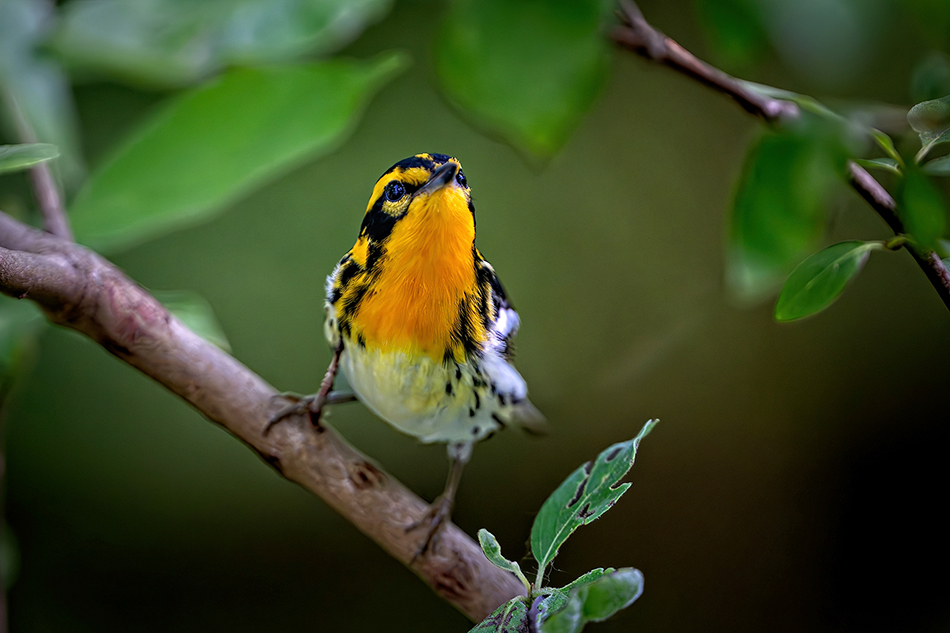
Ever since I started birding, I wanted to go to Magee Marsh. These wetlands bordering Lake Erie were almost mythical. Loads of migrating birds stack up on the south side of the lake, resting and eating before making the long flight north over Lake Erie. Reports of birds ‘dripping’ off bushes sounded too good to be true. And for many, the reason to go to Magee Marsh was the warblers. It is not uncommon to see 25 or more different species during a spring birding trip. Sign me up!
After 35 years of hearing about it, I finally got to go a few weeks ago. Our goal was to photograph warblers. But not just ‘record the species’ photos, we wanted to create beautiful images of warblers. I had talked to other photographers before going, and I found it interesting the different opinions on what lens to bring, use flash or not, and how to photograph the birds in this location. I thought it might help other photographers planning a trip to hear what I learned, and maybe answer some of the questions about photography at this location.
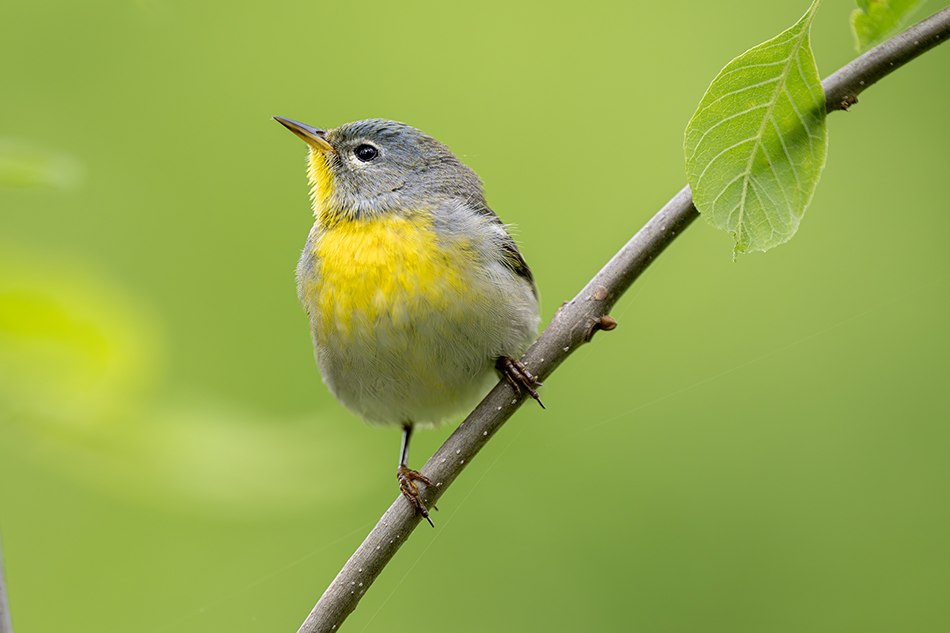
When it comes to photography, there are really two areas to consider at Magee Marsh and the surrounding wetland parks. First, the famous boardwalk you stroll down photographing warblers only a few feet away. And second….everything else! The boardwalk is famous for its close encounter warblers, and it is truly magical. But before we get to that, let’s talk about all the other areas you can photograph. The southern shore of Lake Erie has numerous wetlands and parks that are just incredible for bird photography. Shorebirds, ducks and hundreds of other migrating species come through the area in May. There are no restrictions on using a tripod in these areas, so I would bring your longest lens, 600mm and longer is even better. I brought a Nikon 400mm F2.8 with built in 1.4x converter, so my longest focal length using the converter was 560mm at F4. For many of the areas outside the boardwalk I wished I had a longer lens. A great example is when we arrived at the visitor center. The trees were teeming with Cape May, Magnolia, Blackburnian, Black-Throated Green and Chestnut-sided warblers, just amazing. But these birds were tiny in my frame, I was going to have to crop 50-70 percent to get close enough, and then enlarge the files to get a decent image to use. Backed-off environmental images worked better since I didn’t need to get as close. Cree was using the Nikon 800mm F6.3 and this lens was perfect for long range warblers and distant birds at other areas.

I try to fill the frame with my subject, whether that is environment/bird or is all bird, but I am not against cropping. After all, the Z9/Z8 has a large 45MP file with plenty of room to crop. But cropping will increase noise and reduce the file quality in general…you have less to work with in the final shot. The big question is what is the end use of your image. Social media posts don’t need much file size, so heavily cropped images work fine here. You can make smaller prints just fine with a heavily cropped file. But if I want to make a large print, or send work to clients, I need a large, clean image.
Next up was shooting from the famous boardwalk, where the birds can get very close. Minimum focus distance of your long telephoto lens is important to note here. My Nikon Z 400mm F2.8 1.4x has a minimum distance of 8 feet, so I could focus close to warblers flitting in the trees right in front of me. Cree used the 600mm F6.3 lens, which has a minimum distance of 13 feet. This lens only weighs 3 pounds, and is a fantastic walk around bird photography lens. Cree did have to take a few steps backs occasionally when the warblers got really close, but having 600mm was fantastic. I found I could get close enough to some warblers using my 400mm with the 1.4x…so 560mm at F4. But there were also many times I wished I had a longer lens.
One important thing to note is you are handholding your lens when shooting from the boardwalk. No tripods allowed, although you can bring a monopod. But I found I needed to hand hold and be able to quickly move and pan with fast moving warblers. Also, you need to be nimble trying to move through groups of people on the boardwalk. Everyone was incredibly friendly on the boardwalk, who wouldn’t be in a good mood watching all these amazing warblers?!
What about flash? Flash can pop some color on warblers, but it adds another layer of gear and weight, and eliminates your ability to shoot at 20 frames a second to catch interesting behavior. If you are working with birds coming to perches, flash makes more sense. But on the boardwalk and with more distant birds I didn’t want to set up my flash bracket. We had bright overcast skies many days which produced great eye catchlights and contrasty images.
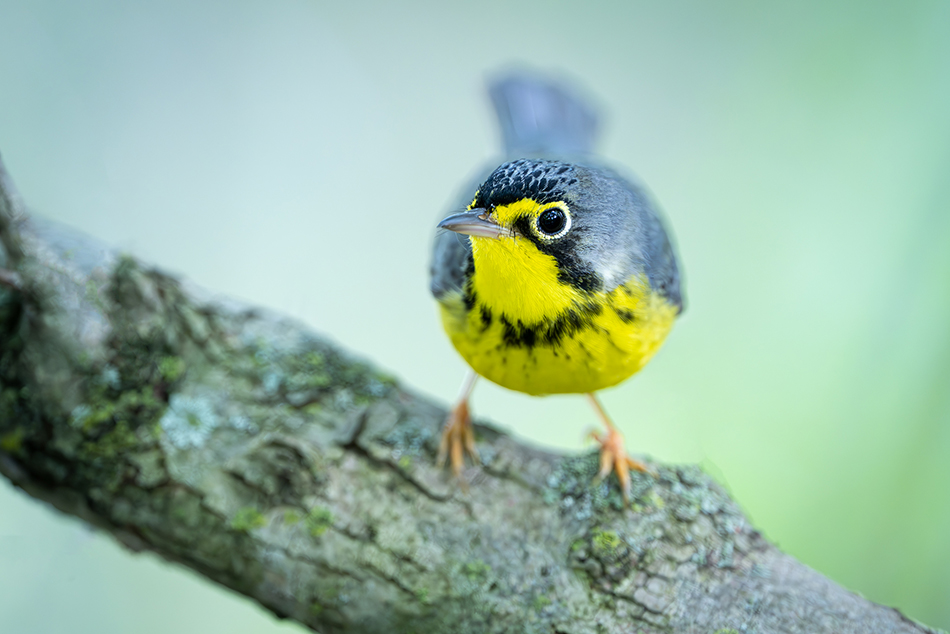
One creative note about photographing close warblers at 560mm F4. Fast lenses are nice to allow you to use lower ISO settings and faster shutter speeds in low light. But F4 does not produce a lot of depth of field at 560mm. Take a look at this Canada warbler image. The eye and face is sharp, but the rest of the bird gets a soft blur, what you would expect using this lens very close to your subject. Some photographers may want the entire bird tack sharp, so you could use an aperture like F16, or wait for the bird to be broadside and get better acuity on the entire bird. I’ve always preferred to approach bird photography like other genres…I want to create mood and feeling in an image, which shallow depth of field can produce. I’m not about recording the species, I’m more interested in creating evocative images. This is subjective, so decide ahead of time your approach to photographing warblers. What do you like in your bird images, and what is the end use?
Next time we go back we will be bringing the 600mm and 800mm F6.3 lenses, a great combo for the variety of birds we will encounter. I think I will try the Nikon Z 600mm F4 with 1.4xTC. This will give me the range I need for birds outside of the boardwalk. And for the boardwalk I will also use this lens. It’s going to be a little bigger to handhold and have a longer minimum distance, but I want to be able to fill the frame with the close warblers and the more distant ones. Maybe I will bring a monopod to make it easier to support.
Magee Marsh lived up to its reputation, it is an incredible location for birding and bird photography. We did run into groups of people on the boardwalk, but this really didn’t take away from the experience. Everyone was super excited about what they were seeing, and readily shared information about other birds being seen. After spending a week in Ohio (including a visit to southern Ohio, see Kentucky warbler image above), we saw 33 species, I still can’t believe it.