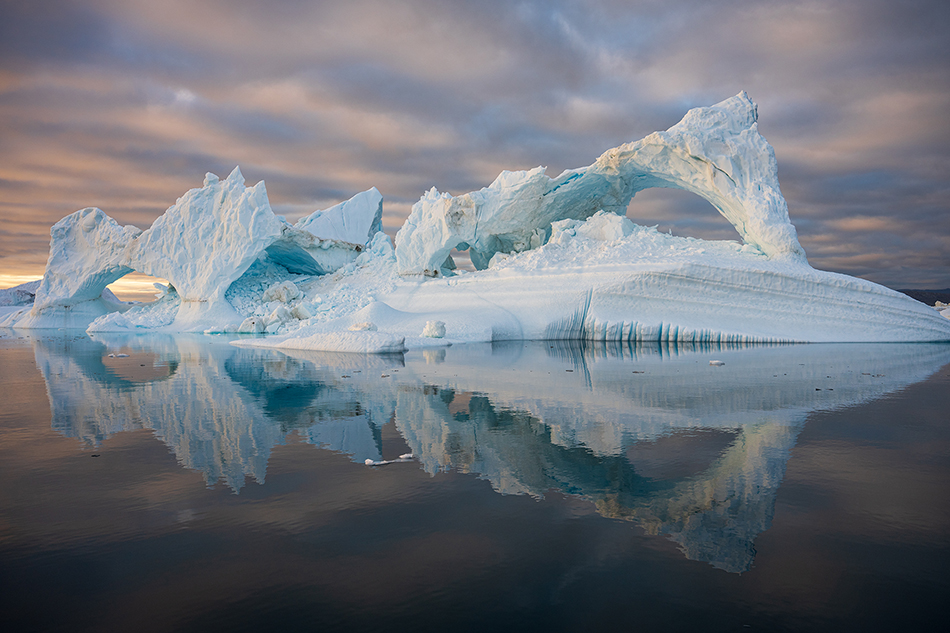
I just returned from three weeks in Greenland. The landscapes are stunning, and the country is huge. I spent most of my time in Disko Bay doing late night iceberg photography. The glacier, which moves 100 feet a day, is the fastest moving glacier on the planet. The result are incredible icebergs with stunning features…spires, arches, double arches. caprocks…I’ve never seen such dramatic icebergs in my travels. Every night we would go out and see what new formations the glacier had created during the night. And since we were on the ocean, reflections were a popular topic.
It seems simple…just photograph the iceberg and the reflection for the shot. But is this really the best way to photograph reflections? Or are there other things to consider when creating a reflection shot? Let’s break down a few ideas we discussed on the boat while we were photographing reflections.
The classic reflection shot is what I call the 50/50. This image has the main horizon line right down the middle, with even proportions above water and reflected in the water. This often is the first place photographers go since it is stunning with interesting subjects and light. The main thing to remember with the 50/50 reflection shot is you are creating stability and tranquility in the image by placing the main horizontal line in the middle. Everything is in perfect balance. The double arch image above is a good example.
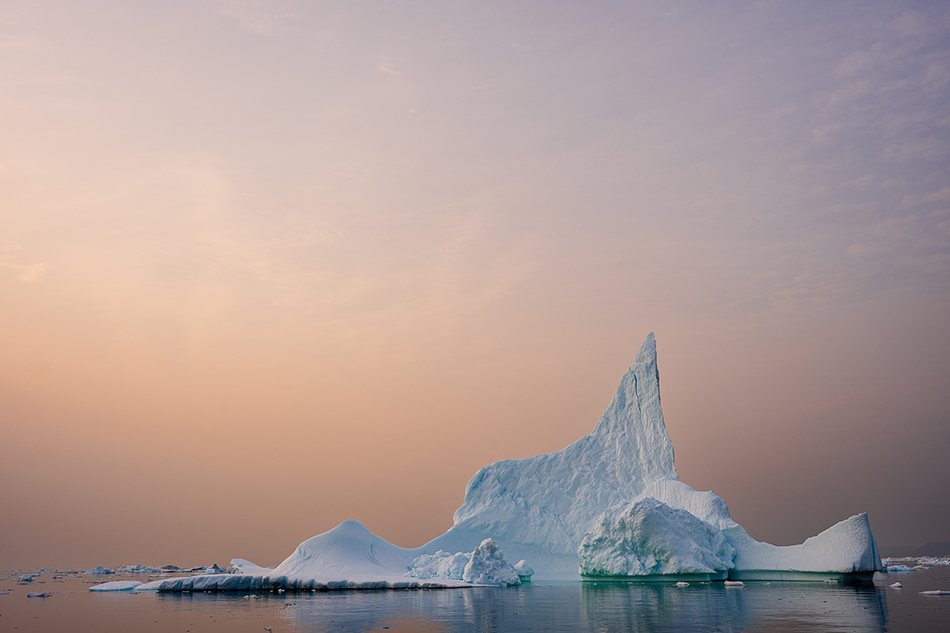
While you may be tempted to shoot all your reflection images this way, remember to ask yourself what are you really trying to say in your photograph. Maybe balance and tranquility is not the message. Take a look at this spire shot. There was a perfect reflection below this, but I didn’t want a balanced calming image. This spire was dramatic, and I wanted to add more negative space above it for tension in the image. So I opted to crop out most of the water and add more of the warm sky. While there was a great reflection, that was not what I wanted to convey.

What other ways can you create drama and tension in your image using reflections? Remember this saying….’pattern is interesting, pattern interrupted is more interesting’. When you have a perfect reflection in calm water, but the reflection is broken or interrupted due to foreground elements, this can create tension in your image and catch the viewer’s attention. Take a look at this image. A beautiful sunlit prow and reflection, but the reflection is broken by small icebergs which catches your eye…this is unsettling. It can be argued that sometimes these foreground elements might ruin a reflection if they are big or in cluttered places. I like a few clean elements to break up the reflection, more of an organized disruption. If a big iceberg blocked a piece of the reflection it might not work.

Personally if I see a great reflection I try to photograph lots of different ways. I was shooting at 20 frames a second from the boat for some reflections since we were motoring past. Get the 50/50, look for interesting foregrounds and breaks in the reflection, and pay attention to the light. One night we had beautiful wam light on the ice. While the reflection image looked good, I wanted to focus on shape, color and light of the ice. So I didn’t worry about getting the entire reflection, I zeroed in the graphic elements that attracted me to the scene…image above.
One technical note. Polarizers will reduce glare and affect your reflection. I didn’t worry about polarizers on these images as the water was glass and the reflections looked great. But we did use polarizers occasionally to reduce water glare to reveal underwater sections of big icebergs.
Just remember one thing…what is attracting you to the photo? Focus on these qualities, and create your shot. If you are not sure, shoot the scene multiple different ways!