Everyone knows ‘what you see is what you get’…right? But not with photography. I have always been fascinated with the ability of a camera to condense milliseconds…or hours…into one single frame in the camera. Your camera has this amazing ability to condense time, and for one brief moment, capture a split second in time. Honestly I think about this a lot. While subject matter, genre and narrative may drive some of my photography interests, just the craft of photography gets me motivated no matter what the subject. I’m a generalist mesmerized by photography and the power of a single still image.
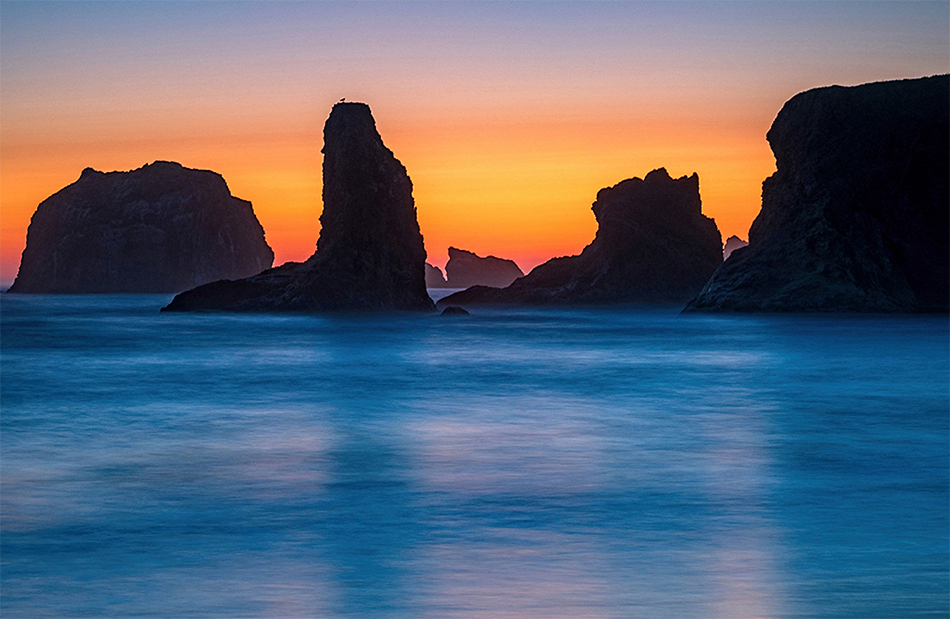
Recently I was on the coast of Oregon photographing beaches and sea stacks. During the workshop the concept of cumulative light came up. Our group was photographing along the coast, and while the scene looked nice, what really brought the image to life was 30 second or longer exposures. While we may only see a little color and light on the horizon, exposing an image for 30 seconds let the light ‘accumulate’ on the sensor, saturating color and producing new shapes that weren’t visible to the naked eye.

Probably the best example of this concept is aurora photography. You might only see a slight green glow in the sky, but after a 20 second exposure the aurora looks bright and vivid in the image.
Less obvious are scenes where the daylight or twilight is minimal, but with a long exposure looks great. Take a look at this long exposure beach shot. There was a faint glow on the horizon, and crashing surf on the beach. But after a long exposure the color rendered beautifully and new shapes appeared on the water.
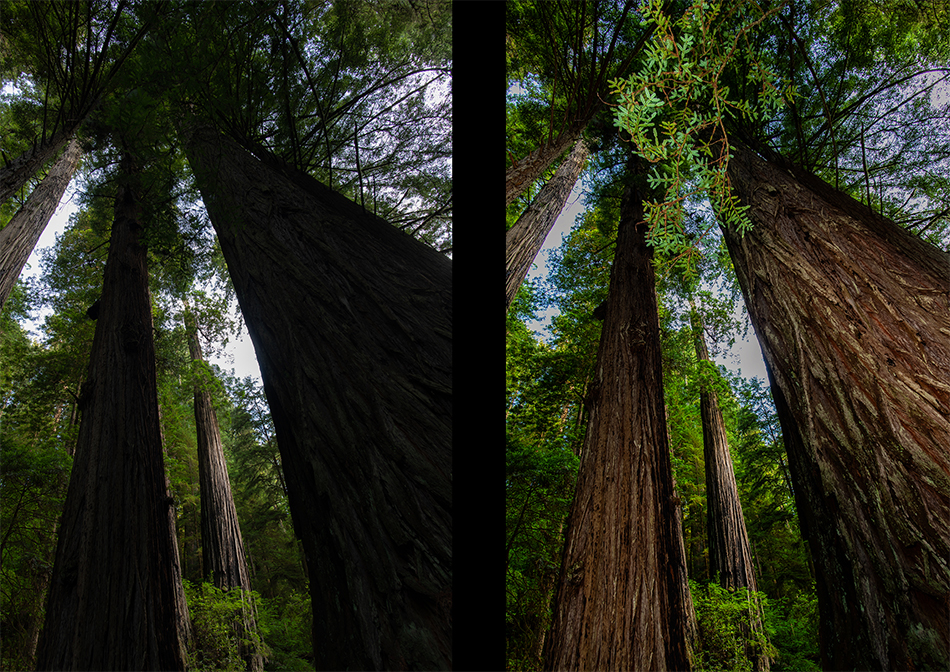
Cumulative light doesn’t always have to be one exposure. For this image of some redwood trees I used my speed light for a multiple exposure and lit a different tree after each shot. The final image looks like multiple flashes in a single frame. But in reality the flash accumulated after each frame in the multiple exposure.

I am still learning what a long exposure will look like. Sometimes you have an idea, and can pre visualize a shot. But many times I just see a hint of color, and try a long exposure to see what happens. You might just be surprised at the result.